
One taster calls a wine earthy. Another calls it faulty. They may be smelling the same compound at different intensities — or bringing different experience and tolerance to the glass.
Context matters, but it does not turn contamination into terroir. A useful fault vocabulary begins with observation, intensity, and effect on the wine, not with a debate about whether unusual always means authentic.
Name what you notice first
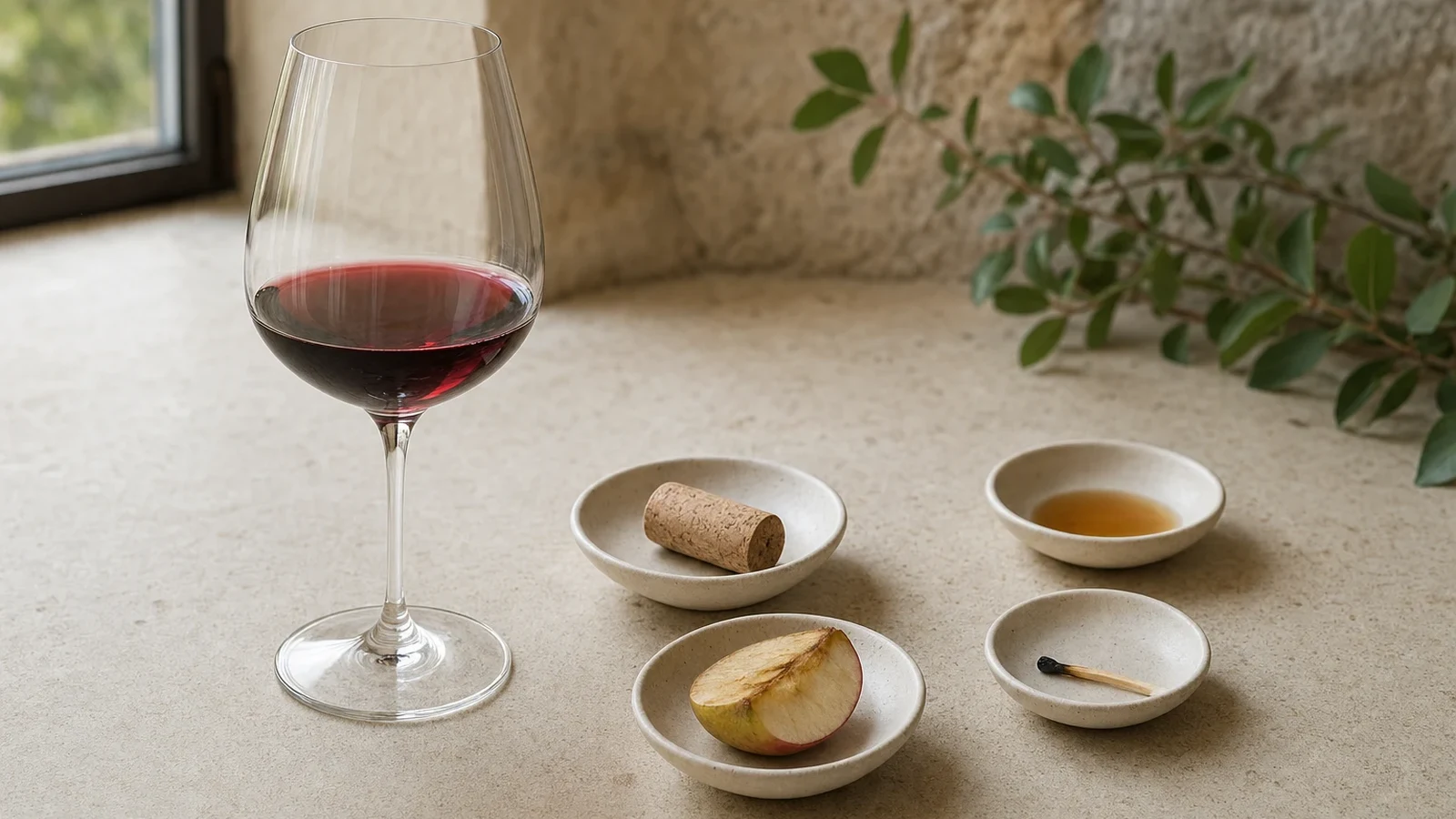
Start with a concrete sensory description: musty cardboard, vinegar, nail-polish remover, struck match, rotten egg, mouse cage, cooked fruit, or bruised apple. Then ask how strong it is and what it does to the rest of the wine.
Does the note sit quietly among fruit and structure? Does it mask the fruit? Does it grow with air? A descriptor is evidence; “fault” is a conclusion about cause and impact.
The filtered contamination aromas give you reference language without pretending a picture can diagnose a bottle.
Thresholds are personal and contextual
An aroma threshold is the concentration at which a compound becomes detectable under particular conditions. People vary greatly. Some tasters detect cork taint at extremely low levels; others first notice that the fruit seems muted. Around one fifth of people cannot smell rotundone, the black-pepper compound in some grapes, even though it is not a fault.
The wine matrix matters too. Sugar, alcohol, fruit, oak, temperature, and other aromas can mask or amplify a compound. A concentration obvious in a delicate white may hide longer in a powerful red.
Common faults have different causes
TCA and related compounds can produce musty, mouldy impressions and suppress fruit; cork is a famous source, but taint can also arise elsewhere in the winery. Excess volatile acidity may smell vinegary, while ethyl acetate can push toward solvent or nail polish. Hydrogen sulfide suggests rotten egg; other volatile sulfur compounds have different aromas and behaviour.
Oxidation can brown colour and shift fresh fruit toward bruised apple, nuts, or stale notes. Yet deliberate oxidative ageing creates valid styles when the wine is protected and balanced for that path. The aroma alone is not enough: intended method and overall condition decide the interpretation.
Character still needs proportion
Earth, leather, smoke, volatile lift, or reduction can add complexity at low intensity for some drinkers. When the same note overwhelms fruit, shortens the finish, or signals instability, calling it “character” does not repair the wine.
Preference and technical soundness overlap but are not identical. You may dislike a clean wine’s style. You may enjoy a bottle that shows a minor technical deviation. Honest language can hold both thoughts: I enjoy this and this aroma likely comes from a fault-related process.
Use air as a cautious clue
Pour a small sample and return after ten minutes. Some reductive sulfur aromas may lessen with air; oxidation will not reverse, and volatile acidity may become clearer. Cork taint often continues to suppress fruit.
Air is not a laboratory test. Do not use copper coins or other improvised additions in a glass you plan to drink. If a wine smells chemically unsafe, unusually mousy, or seriously spoiled, stop tasting and contact the seller or producer.
Compare before you diagnose
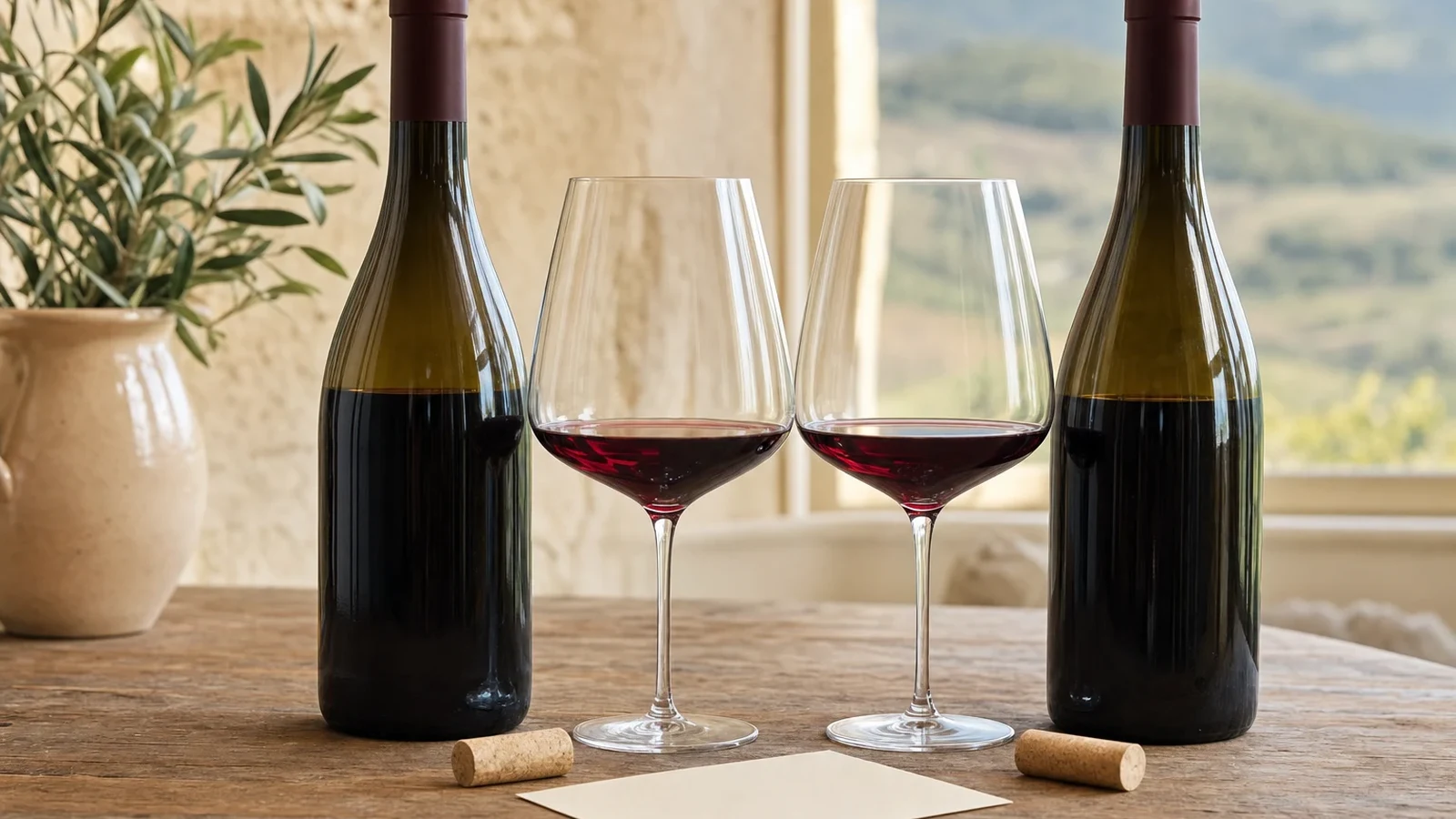
When possible, open a second bottle or taste alongside a known sound example. Work through a simple sequence:
- Describe the aroma without naming the cause.
- Rate its intensity.
- Note whether fruit, structure, and finish remain clear.
- Watch how it changes with air and temperature.
- Only then suggest the most likely explanation.
Professional sensory standards use controlled reference samples because memory alone is unreliable. At home, the goal is not to win an argument. It is to recognize when an aroma adds interest, when it steals the wine’s voice, and when the bottle may need to go back.
Terroir is not a hygiene excuse
Place influences grapes through climate, soil, topography, farming, and human tradition. Microbial life is part of winemaking, but avoidable contamination does not become a more truthful expression of place because it sounds romantic.
Respect for origin includes careful farming, clean equipment, sound fermentation, and transparent choices. Character can be wild, savoury, or unfamiliar while still letting grape and place speak.
The best fault vocabulary is calm and specific: what you smell, how much, what it changes, and what evidence supports the cause. That is more useful than either panic or romance.