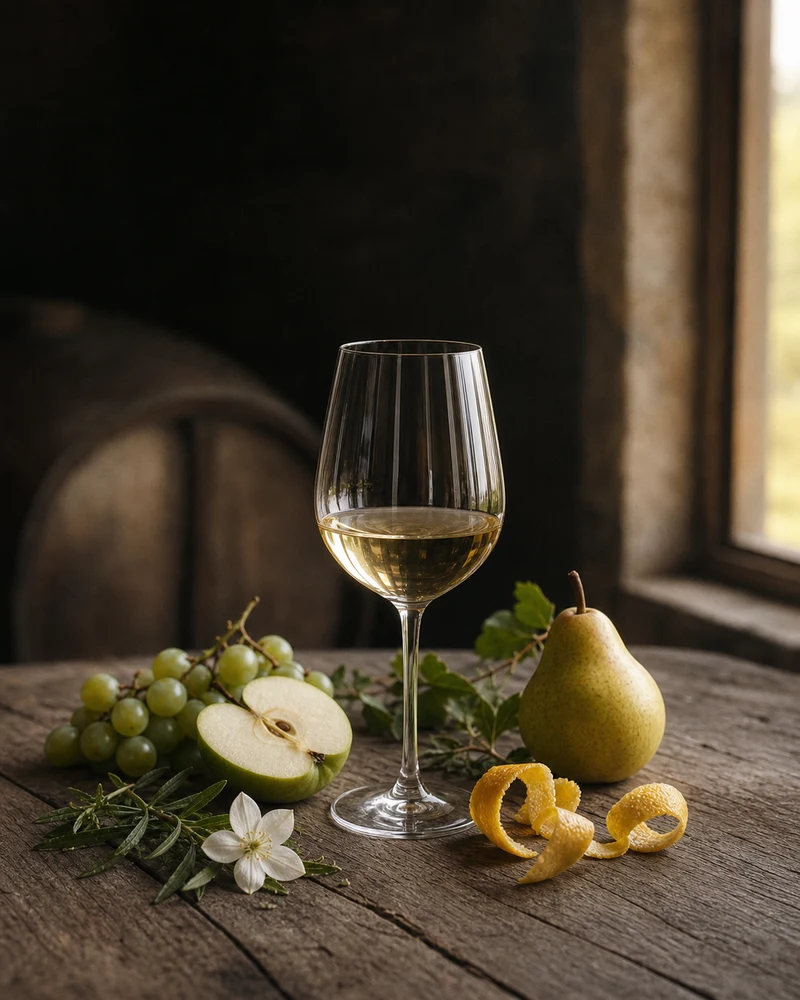
A glass of wine can smell like lemon, peach, blackcurrant, violet, pepper, toast, or mushroom. Yet the ingredient list may contain nothing more dramatic than grapes.
That is not a tasting trick, and it does not mean fruit flavouring was added. Your nose recognizes volatile molecules and compares their patterns with smells stored in memory. If a combination resembles pear, you reach for “pear” because it is the clearest shared word available.
Wine aroma is therefore both chemical and personal: molecules rise from the glass, while your experience gives them names.
The grape arrives with an aromatic toolkit
Some aroma compounds are already present in grapes. Others arrive as non-aromatic precursors—molecular building blocks that fermentation or ageing can later release and transform.
Different varieties carry different toolkits. Terpenes help make grapes such as Muscat and Gewürztraminer distinctly floral. Methoxypyrazines can contribute green-pepper or herbal notes to varieties including Cabernet Sauvignon and Sauvignon Blanc. Thiol precursors can become aromas associated with grapefruit, passion fruit, or blackcurrant leaf.
Climate, sunlight, ripeness, vineyard water, and grape health influence this starting material. That is why the same variety can lean toward citrus in one setting and riper stone or tropical fruit in another without ceasing to be itself.
Calling these primary aromas is useful: they connect most directly to grape and growing conditions. But “primary” does not mean simple, and the compounds do not respect tidy classroom borders.
Yeast rearranges the toolkit
During fermentation, yeast converts sugar into alcohol and carbon dioxide. At the same time it produces and releases many aroma-active compounds.
Esters are especially important to fruity and floral impressions. Some may suggest apple, pear, banana, pineapple, or blossom even though none of those ingredients entered the fermenter. UC Davis explains how yeast strains, juice composition, fermentation conditions, and concentration all change the contribution of esters and other fermentation aromas.
Concentration matters. A compound that lifts fresh fruit at a low level can smell like sweets, solvent, or an exaggerated perfume when there is too much. Aroma also comes from mixtures: one molecule rarely carries the whole fruit basket by itself.
These fermentation-shaped smells are often called secondary aromas. Lees ageing, malolactic fermentation, and other cellar choices may add bread, cream, butter, or savoury notes. Again, the category is a map, not a wall.
Time edits the vocabulary
Young wine often leads with fresh fruit. With bottle age, some compounds fade, others form, and the relationships among them shift.
Fresh lemon may move toward preserved citrus. Red berries may suggest dried fruit, forest floor, leather, tobacco, honey, or nuts as the wine develops. Oak and controlled oxygen can add their own layers before bottling; storage and closure continue the story later.
Researchers at the UC Davis Waterhouse Lab describe how grape-derived precursors can release aromatic norisoprenoids during fermentation and ageing. Some contribute fruity or floral effects, while compounds such as TDN are associated with the petrol-like note found in some aged Rieslings.
These developed notes are often grouped as tertiary aromas. They do not automatically mean a wine is better. Some wines gain complexity with age; others simply lose the freshness that made them delightful.
Aroma families are a map, not a verdict
Primary, secondary, and tertiary are valuable teaching labels because they point toward likely origins:
- Primary: grape variety and growing season
- Secondary: fermentation and cellar processes
- Tertiary: maturation and bottle development
Real wines blur the edges. A fruity smell may come from grape compounds, fermentation esters, interactions among several molecules, or all three. Vanilla may suggest oak, but perception also depends on the rest of the wine. Butter may point toward malolactic fermentation, not a dairy ingredient.
The same applies to faults. A compound’s concentration and the wine around it can change whether you read a note as complexity, distraction, or defect. Naming an aroma is the start of investigation—not proof of one production choice.
Train comparison, not performance
You do not need to guess “white peach picked on a Tuesday.” Useful tasting language starts broad.
- Name the family: fruit, floral, herbal, spice, earth, oak, fermentation, or development.
- Move one step closer: citrus or orchard fruit? Fresh or dried? Green herb or dried herb?
- Check intensity: is the note quiet, clear, or dominant?
- Return to structure: acidity, sweetness, tannin, alcohol, and texture help test whether your aroma idea fits the whole wine.
Smell a real lemon peel or pear, then return to the glass. You are not searching for the ingredient. You are giving your memory a sharper reference.
Aroma Explorer lets you browse those references by family and origin. Use it as a vocabulary shelf, not an answer key.
There is no prize for the most poetic tasting note. A good note helps another person understand what you noticed—and helps you recognize the pattern next time.
Wine smells like fruit because grapes, microbes, oxygen, and time create molecules your memory already knows how to compare. The glass supplies the signal; you supply the language.