
Tannin is the dry, gripping sensation that makes your gums feel slightly rough after a sip of red wine. It is not a flavour like blackberry or vanilla. It is structure — a family of phenolic compounds that interact with proteins in your saliva.
That simple definition opens a useful question: if two wines are equally tannic, why can one feel silky and the other coarse? The answer begins with where the tannin came from, then continues with ripeness, extraction, oxygen, and time.
Start with skin and seeds
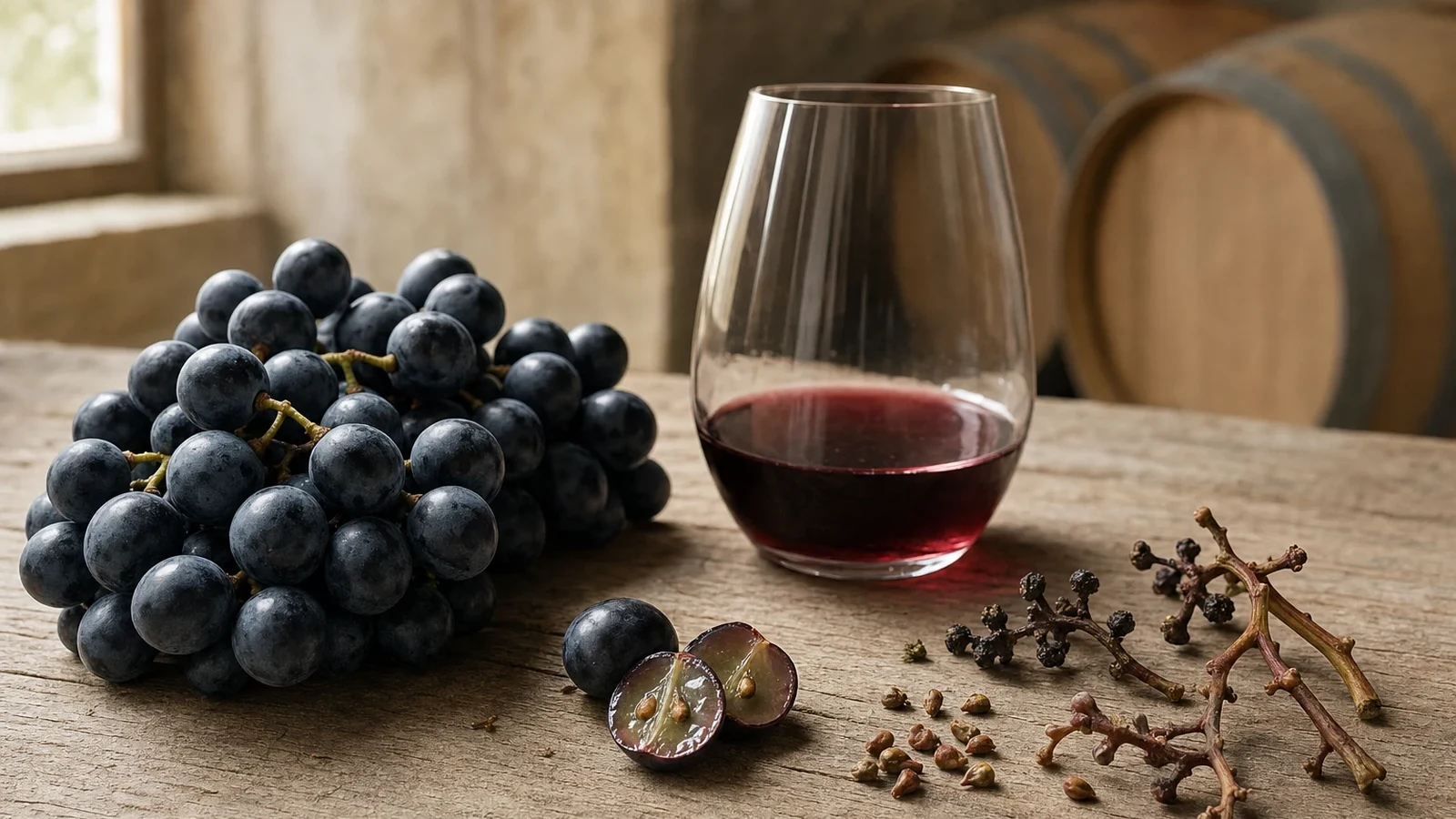
Most grape tannin that reaches wine comes from skins and seeds. Once grapes are crushed and alcohol begins to form, these compounds can move into the fermenting juice. Skin tannins are generally easier to extract; seed tannins often arrive later and can feel firmer or more bitter, especially when seeds are unripe or damaged.
Colour and tannin often travel together because red wine spends time with dark skins, but they are not the same substance. A deeply coloured wine is not guaranteed to be fiercely tannic, and a paler red can carry serious grip. Grape variety, berry size, skin thickness, season, and winemaking all change the result.
Stems enter with whole clusters
If a winemaker ferments whole bunches, stems join the vat. Ripe stems can add tannin, fragrance, and a different architectural feel; green stems can add herbal flavours and angular grip. That is why whole-cluster fermentation is a considered choice, not a shortcut to “more structure.”
Open the whole-cluster profile and notice how stem ripeness, proportion, and grape variety matter. The useful lesson is not that stems are good or bad. It is that the material and its maturity change what extraction can give.
Extraction is the volume control
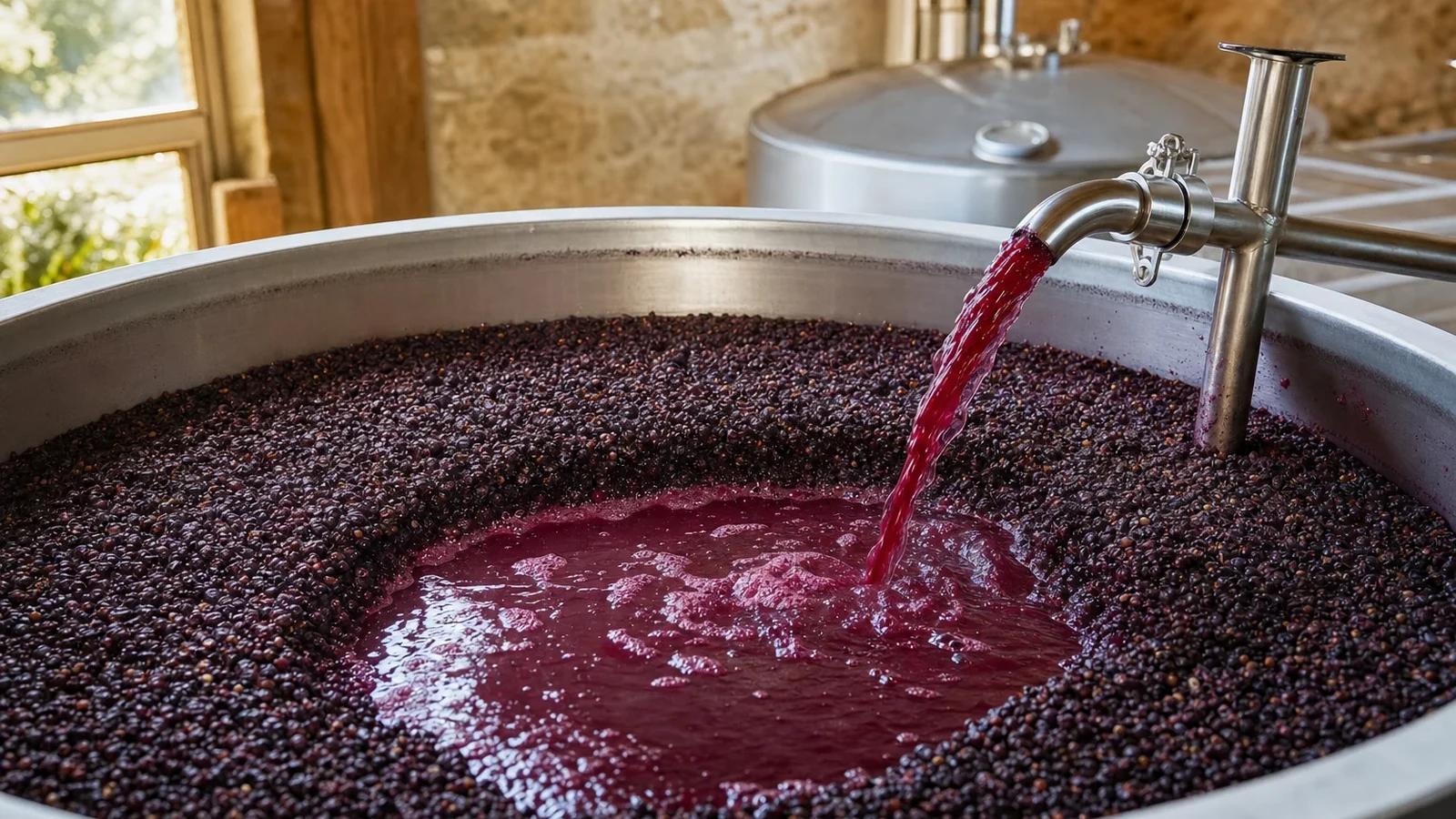
Tannin must move from solid grape material into wine. Time, temperature, alcohol, cap management, and pressing determine how much and what kind is extracted. Gentle pump-overs can wet the cap without the same force as aggressive punch-downs. Extending skin contact after fermentation may continue to reshape tannin even when colour gain slows.
More extraction is not automatically more quality. The goal is a structure that fits the fruit, acidity, and intended life of the wine. The extended-maceration method shows why winemakers taste continually rather than simply count days.
Oak adds another tannin family
Oak can contribute ellagitannins as well as aromas and controlled oxygen exposure. Newer, smaller barrels generally make their presence felt more clearly than older, larger vessels, but toast, origin, grain, time, and the wine itself all matter.
Do not turn “tannic” into “oaky.” A wine can have abundant grape tannin without ever entering a barrel, and an oak-aged white may show wood influence without the gum-drying structure of a young Cabernet. Oak is one possible contributor inside a larger system.
Time changes the feel, not by magic
During winemaking and bottle age, tannins react with other wine components. Their size, solubility, and relationship with pigments evolve; some material eventually forms sediment. A young wine’s sharp edges can feel more integrated later, yet ageing cannot rescue fruit that lacked balance from the beginning.
Temperature, oxygen exposure, and bottle condition matter. “Softens with age” is a tendency, not a promise that every rough wine will become velvet.
Build a tannin map with your mouth
Pour a light red, a young Cabernet Sauvignon, and a skin-contact white. Take a small sip, move it around your mouth, swallow or spit, then wait. Ask:
- Where is the grip: tongue, cheeks, gums, or finish?
- Does it feel powdery, silky, chalky, or coarse?
- Is bitterness present, or mainly dryness?
- Do acidity and fruit keep the structure in balance?
Then try the same wine with a protein-rich bite. Tannin binds with proteins, so the sensation often changes. This is not a trick to hide bad wine; it demonstrates why structure and food can meet so naturally.
Tannin is not a single dial marked low to high. It is a material with a source, an extraction history, and a texture. Follow those three clues and “grippy” becomes a much more precise tasting word.