Umbria has no coastline, no giant vineyard plain, and no single wine style that explains it. That is precisely its charm.
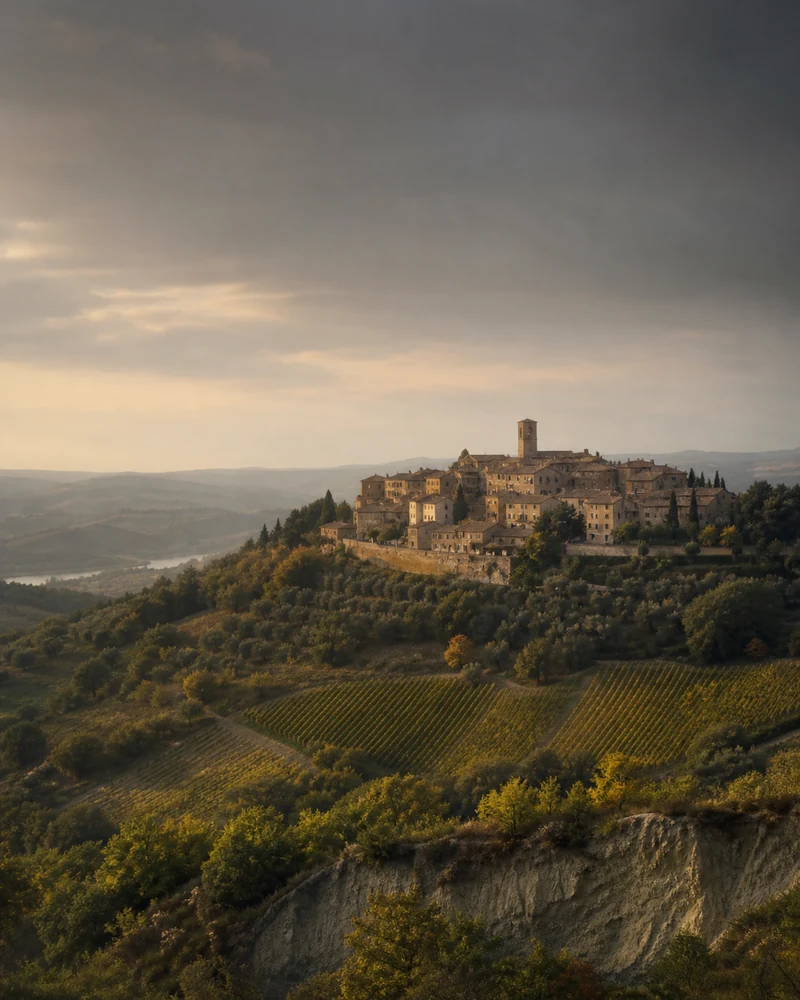
This compact region in central Italy folds vineyards into wooded hills, olive groves, river valleys, and stone towns. Drive from Orvieto in the southwest toward Montefalco and Spoleto, and the wine changes with the view: pale, textured whites give way to savoury Sangiovese blends, then to one of Italy’s most tannic native reds.
Umbria rewards curiosity because it makes contrast easy to taste. The region’s story is not “white versus red.” It is about how grapes, soils, altitude, and old cellar traditions keep answering the same landscape in different ways.
A landscape with no sea
Umbria is Italy’s only region without either a coastline or an international border. Water still shapes it. The Tiber and its tributaries cut through valleys; Lake Trasimeno softens the western landscape; the Apennines rise to the east. Between them, vines often occupy slopes and terraces rather than one continuous carpet.
Those hills matter. Elevation and exposure can stretch the day between warm sunlight and cooler nights, helping grapes retain freshness as they ripen. But “Umbrian climate” is only a starting point. A sheltered site near a river is not the same as a breezy hillside, and soils shift over short distances from clay and limestone-rich material to sand, sediment, and volcanic tuff.
The built landscape belongs to the wine story too. Medieval towns sit high above the valleys because position once meant defence and trade. Today those same slopes create varied vineyard exposures. Around Perugia and Torgiano, the regional landscape authority describes viticulture as a long-established force that has shaped the hills alongside roads, settlements, and agriculture.
Two places, two first impressions
Orvieto rises from a plateau of volcanic tuff above the Paglia valley. Beneath its streets lies a network of Etruscan caves, wells, and cellars. The image is dramatic, but the local wine is often subtle: straw-coloured, gently aromatic, fresh, and sometimes marked by a lightly bitter finish.
Current Orvieto DOC rules build the white around Procanico—the local name used for Trebbiano Toscano—and Grechetto. Together they must form at least 60% of the vineyard blend. The denomination reaches beyond Umbria into part of northern Lazio, and it includes much more than one dry style: abboccato, amabile, sweet, late-harvest, and noble-rot wines are all part of the official family.
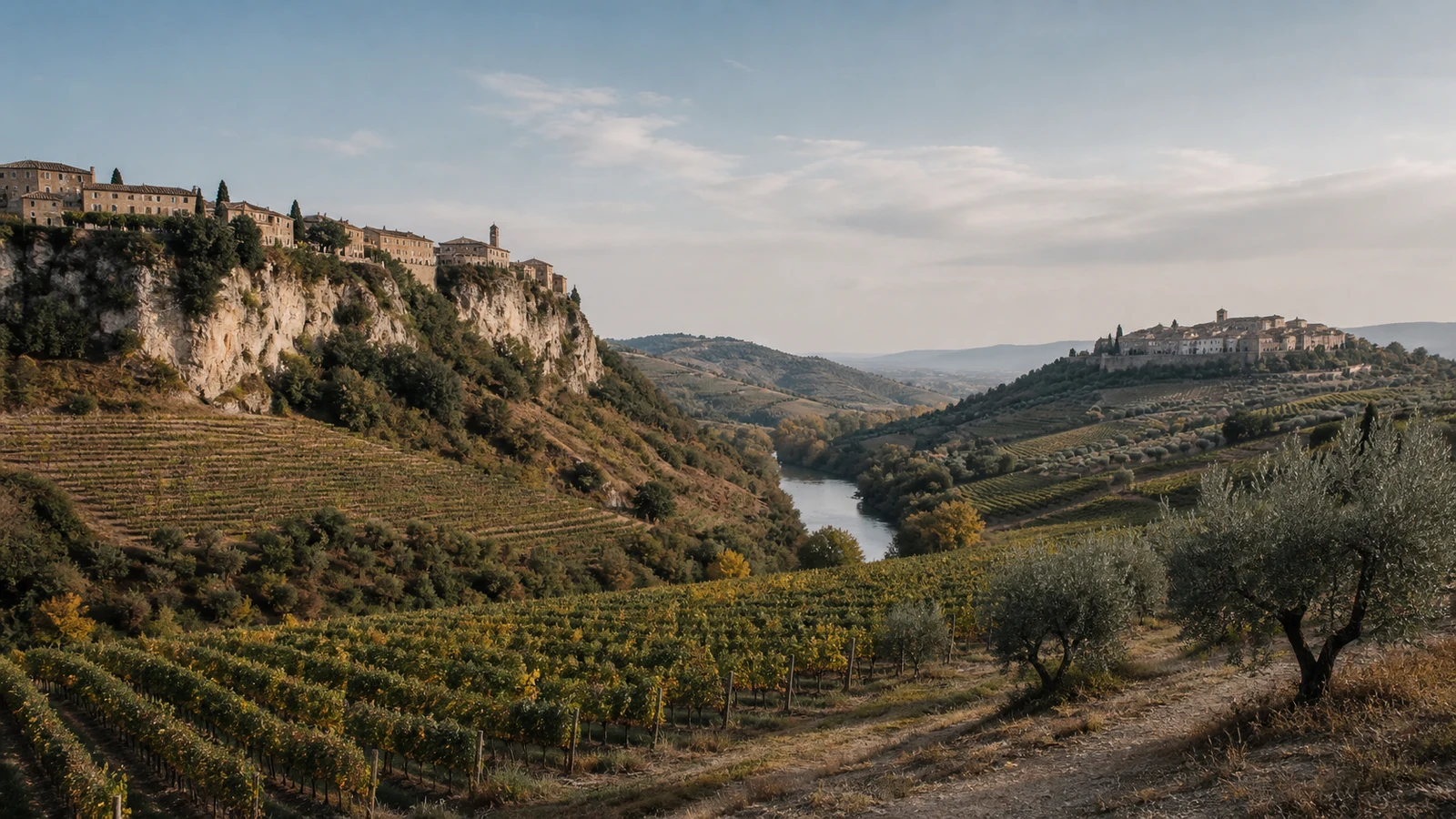
Travel east and Montefalco changes the volume. The walled hill town looks across valleys lined with vines and olives. Here Sagrantino gives deeply coloured wines with formidable tannin. Montefalco Sagrantino DOCG is made entirely from that grape, in dry and passito versions. The regulations require long ageing, but time does not erase the structure; it helps the fruit, savoury detail, and tannin learn to speak together.
Between those poles sit many useful bridges. Montefalco Rosso puts Sangiovese at the centre with Sagrantino in support. Torgiano Rosso Riserva is also Sangiovese-led and shows another, often more graceful, face of Umbrian red wine.
The grapes draw the route
Four names unlock much of the region:
- Grechetto brings apple, citrus, flowers, herbs, and a gently grippy texture. In Orvieto it works with Procanico; elsewhere it can stand more visibly on its own.
- Procanico helps give Orvieto its quiet freshness and drinkability. The name belongs to the local Trebbiano Toscano tradition, not to every grape called Trebbiano.
- Sangiovese is Umbria’s adaptable red thread: bright and savoury in lighter wines, deeper with blending and ageing.
- Sagrantino is the local heavyweight. Its dark fruit and powerful tannin explain why dry examples welcome time—and why sweetness in the passito version does not make the wine feel simple.
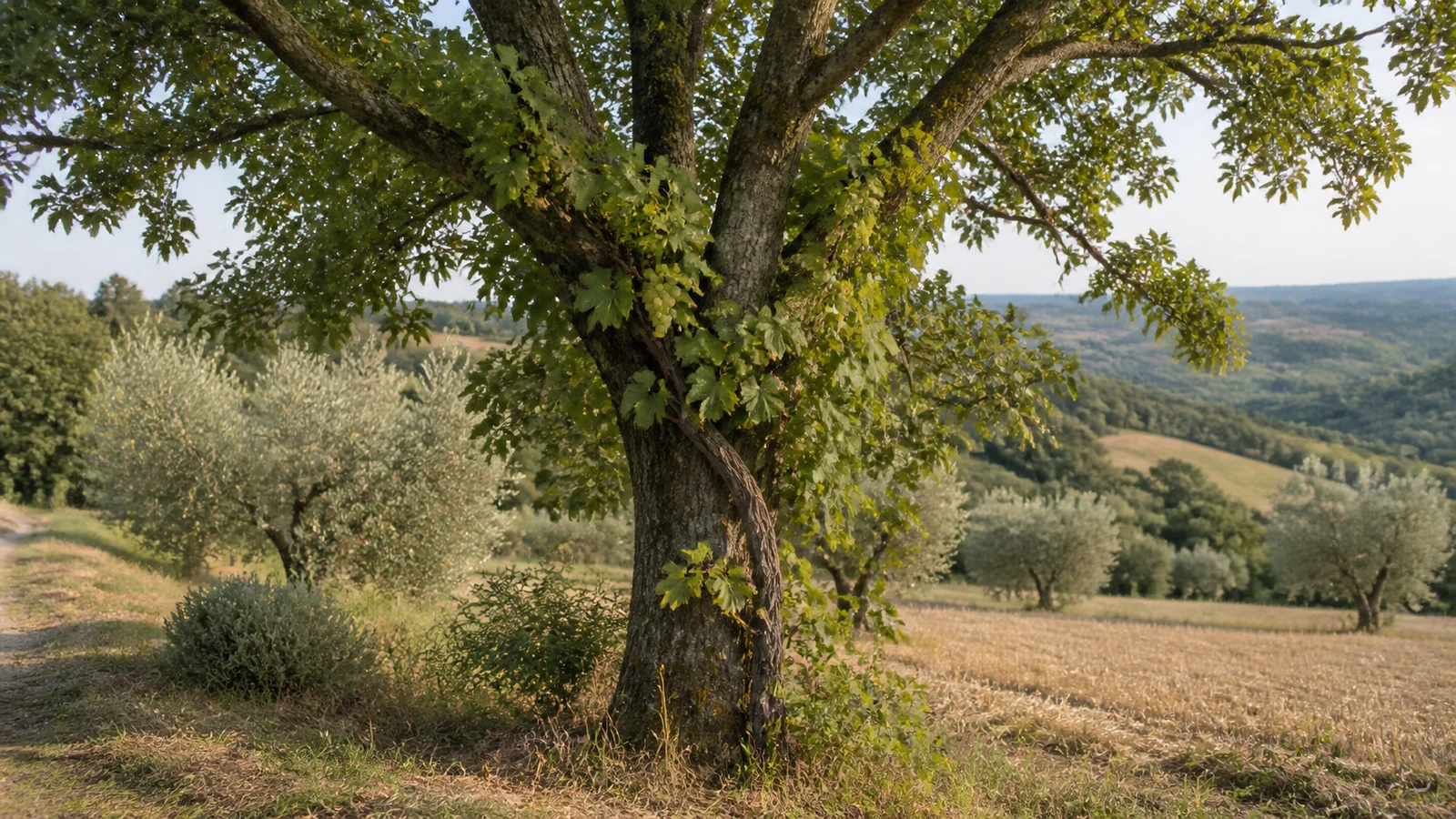
Then there is Trebbiano Spoletino, a distinct variety with a story of its own around Spoleto. Traditionally, some vines were trained high into field trees in a system known as vite maritata, or “married vine.” Modern vineyards may use more conventional training, but the old image captures something important: Umbrian wine did not grow apart from the farm. Vines, grain, olives, trees, and people shared the same working landscape.
One label trap is worth remembering. Grechetto di Orvieto is the Grechetto profiled in Wine Companion. Grechetto di Todi—also called Grechetto Gentile—is genetically tied to the separate Pignoletto identity. Similar names do not guarantee the same grape.
Dry, sweet, and unmistakably local
Umbria’s most revealing contrast may sit inside the same grape.
Dry Sagrantino is dense and structured. In the traditional passito, harvested grapes are dried before fermentation, concentrating sugar and flavour. The result is sweet, yet the grape’s tannin provides a firm frame. Taste it and notice how sweetness and structure pull in opposite directions without cancelling each other out.
Orvieto tells a quieter version of the same lesson. A dry bottle can be light-footed and gently almondy; late-harvest or muffa nobile styles move toward richer texture, honeyed fruit, and sweetness. Noble rot is not simply “very ripe grapes.” Under suitable conditions, Botrytis cinerea concentrates the berries and reshapes their aromas. It is an exacting style, not the default face of every vintage.
This is why Umbria resists one tasting note. Its identity is a pattern: freshness beside texture, savoury reds beside forceful ones, and old sweet-wine traditions living alongside modern dry styles.
Taste Umbria as a three-glass journey
Build a small flight instead of searching for one “typical” bottle:
- Start with a dry Orvieto or varietal Grechetto. Look for citrus or orchard fruit, herbs, freshness, and texture. Is the finish crisp, gently bitter, or rounded?
- Move to a Sangiovese-led red from Montefalco or Torgiano. Notice red fruit, savoury tones, acidity, and the shift from white-wine grip to red-wine tannin.
- Finish with Sagrantino—dry or passito. In the dry wine, follow the density and tannin. In the passito, ask whether sweetness hides that structure or makes it easier to see.
Keep the food Umbrian in spirit: lentils, roast pork, mushrooms, aged pecorino, olive oil, and simple grilled dishes all give the wines something earthy or savoury to answer.
You will not finish the flight with one neat definition of Umbria. You will have something better: a map of contrasts you can recognize in the next glass.
Umbria teaches place through tension: white and red, freshness and grip, dry and sweet, ancient cellars and living vineyards. Follow those opposites and the region begins to feel wonderfully coherent.