
Chardonnay can taste like green apple and chalk, ripe peach and cream, or citrus wrapped in toast. That range sometimes makes it seem like a grape with no identity. The opposite is more useful: Chardonnay is a clear interpreter of place, ripeness, and cellar choices.
Instead of memorising one “typical Chardonnay,” learn the levers. Climate, site, harvest timing, fermentation vessel, lees, oak, and malolactic fermentation each move the wine in a different direction.
Climate sets the ripeness window
In a cooler setting, Chardonnay may ripen with brisk acidity and flavours that suggest citrus, green apple, white flowers, or a stony edge. In warmer conditions, the fruit can move toward yellow apple, peach, melon, or tropical notes, with more body and softer-feeling acidity.
These are tendencies, not passport rules. A sunny slope in a cool region may taste broader than a windy coastal site in a warm country. Yield, canopy, water, harvest date, and season can all redraw the line. “Cool climate” and “warm climate” are starting clues, not finished tasting notes.
Site gives climate an address
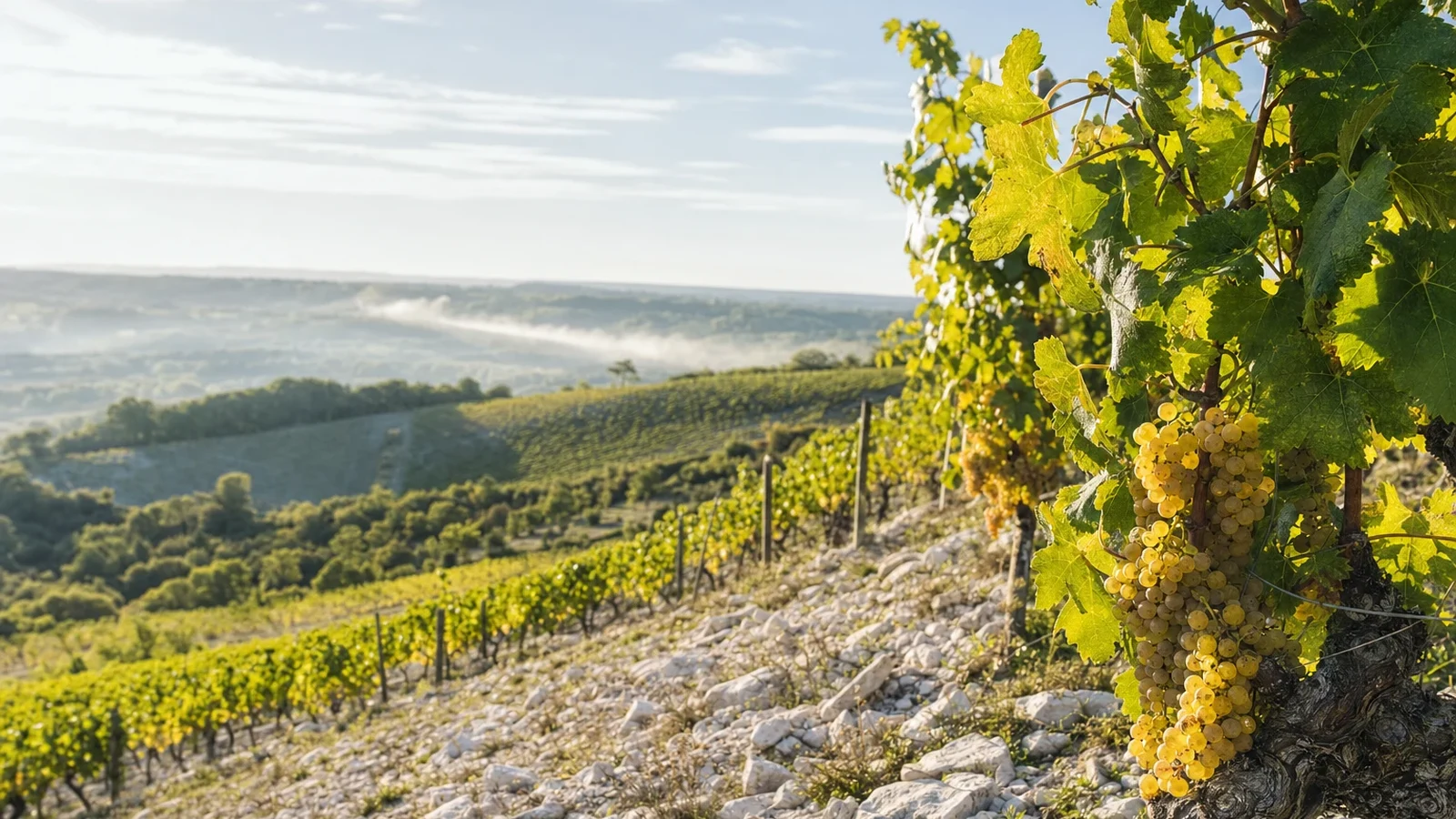
Slope, exposure, soil, altitude, and water availability decide how a vine experiences the regional weather. Bourgogne makes the idea easy to see: Chardonnay can feel taut in Chablis, broader in parts of the Côte de Beaune, and generous in the Mâconnais, yet the grape name remains unchanged.
Soil does not pour literal chalk or stone flavour into the berry. It influences drainage, water access, temperature, and root environment; the resulting wine emerges from that site together with farming and cellar work. The phrase “minerality” may be useful tasting language, but it is not a chemical shortcut from rock to glass.
Harvest decides which fruit enters the cellar
Pick earlier and acidity is often higher, potential alcohol lower, and fruit less ripe. Wait longer and sugar, flavour maturity, and body may rise while acidity changes. Neither choice is automatically better. A sparkling base wine needs different fruit from a still, barrel-aged Chardonnay.
This is the first reason two neighbouring vineyards can yield different styles: the winemakers may be aiming at different wines before a barrel appears.
Vessel and lees reshape texture
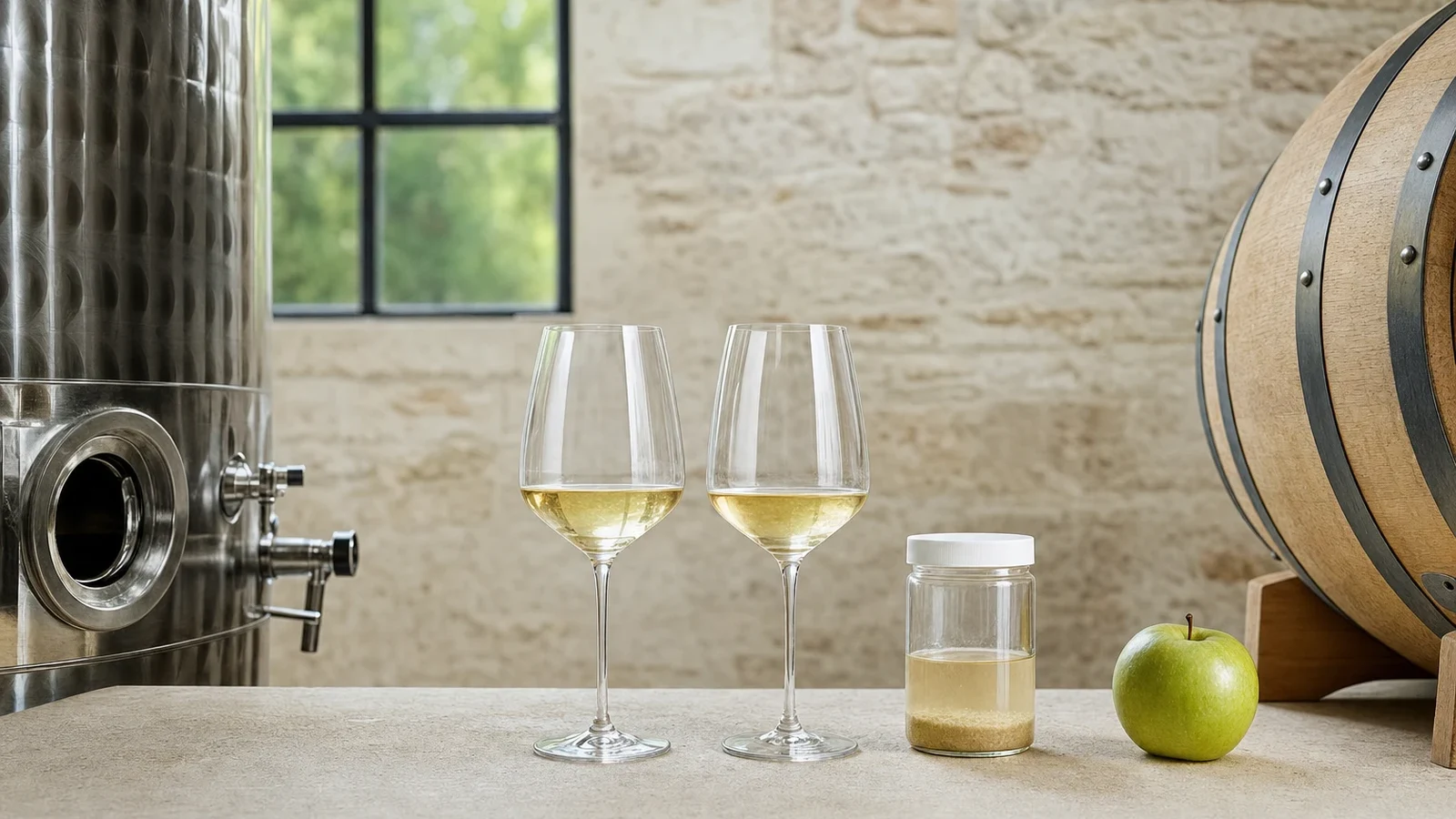
Stainless steel protects a clean, fruit-led profile and limits oxygen, but it does not automatically make a wine lean. Barrel fermentation can bring oxygen exchange and textural breadth; concrete and larger neutral wood offer other paths.
After fermentation, yeast cells settle as lees. Time on fine lees can add texture and savoury or bread-like complexity. Stirring the lees may increase contact and richness, yet not every wine needs it. Vessel and lees are separate decisions, even when they work together.
Oak and malolactic fermentation are not twins
Oak can add aromas such as toast, spice, or vanilla, plus tannin and slow oxygen exposure. Its effect depends on newness, size, toast, grain, and time. Read oak ageing as a toolbox, not a flavour button.
Malolactic fermentation is a biological conversion of sharper malic acid into softer lactic acid. It may round acidity and change texture. Diacetyl can contribute buttery aroma, but its level is manageable and the impression may be subtle or absent. A Chardonnay can be oaky without being buttery, buttery without obvious new oak, both, or neither.
Compare by one lever at a time
Open the comparison tool with Chardonnay selected, then build a small tasting flight:
- Start with an unoaked, cool-site example.
- Add a riper Chardonnay made without obvious new oak.
- Finish with a barrel-fermented or barrel-aged example.
For each glass, record fruit ripeness, acidity, body, texture, oak aroma, and any creamy or buttery note separately. Do not write “rich” and stop. Ask what created the richness.
Chardonnay becomes much less confusing when you stop asking which version is the real one. They are all answers to different combinations of place, season, and intent.
The grape is the common thread, not the finished style. Follow the levers and every Chardonnay becomes a readable set of choices rather than a surprise in a bottle.