
Say “malolactic fermentation” and many drinkers hear “buttery Chardonnay.” Butter can be part of the story, but it is neither the definition nor a guaranteed result.
The core change is structural: lactic acid bacteria convert sharper malic acid into softer lactic acid and carbon dioxide. Aroma and texture may change too, depending on the wine and how the process is managed.
It is not a second alcoholic fermentation
Despite the familiar name, malolactic fermentation — often shortened to MLF — does not primarily turn sugar into alcohol. It follows or overlaps alcoholic fermentation and is usually carried out by bacteria such as Oenococcus oeni.
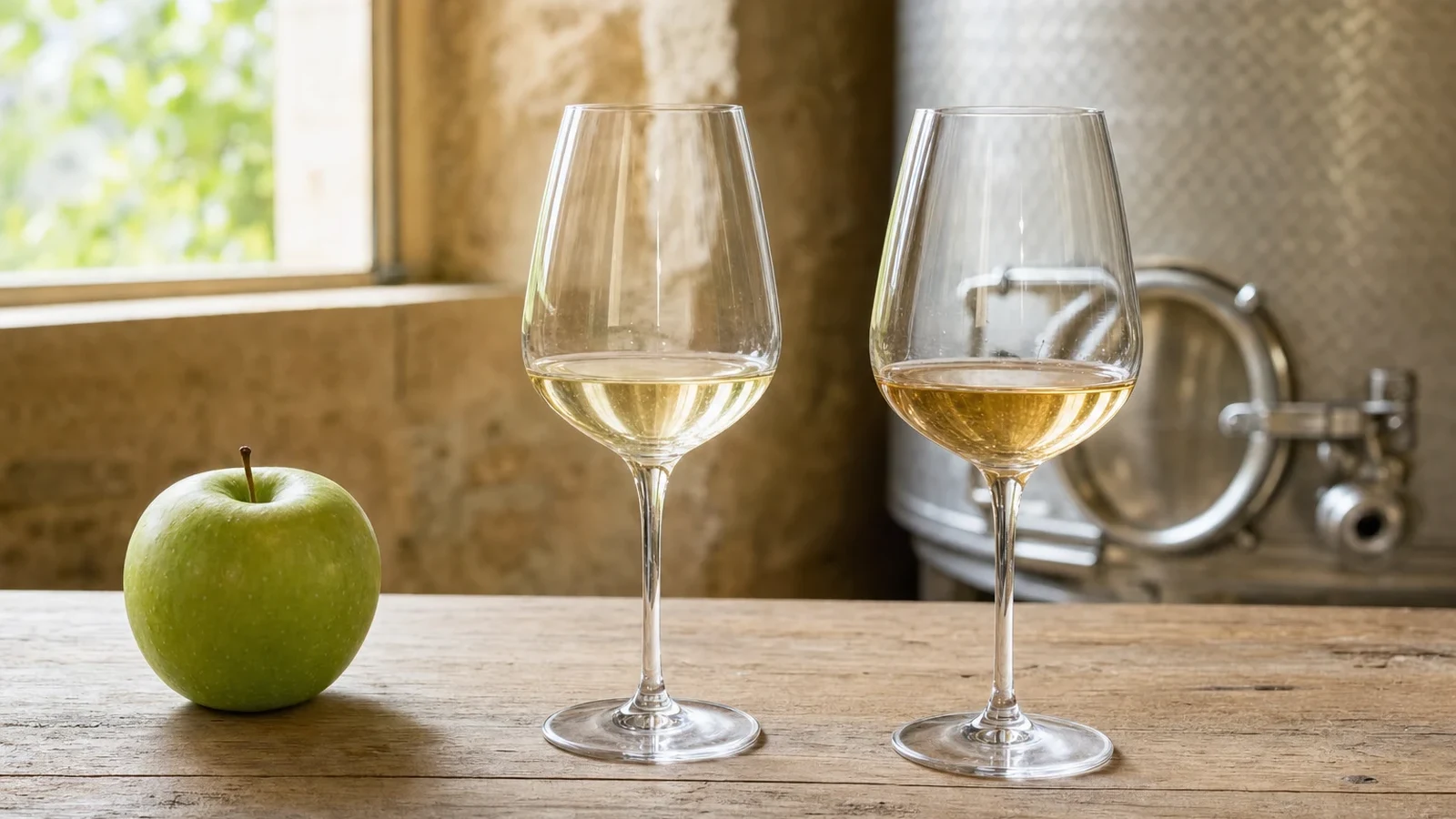
Think of green apple beside yoghurt: malic acid is associated with a firmer, sharper impression; lactic acid is gentler. That comparison describes the direction, not an ingredient list. No dairy is added to the wine.
The first effect is acidity
Converting malic to lactic acid lowers total acidity and changes its shape on the palate. In a high-acid wine, that can create balance and a rounder feel. In a wine that already lacks freshness, full MLF may make it broad or flat.
Winemakers can encourage, prevent, delay, or apply the process to only part of a blend. Temperature, pH, sulfur dioxide, bacterial strain, nutrition, and timing all influence success. The MLF profile shows why “did it go through malo?” is only the beginning of the question.
Butter comes from diacetyl
Diacetyl can be produced during bacterial metabolism and may smell buttery or butterscotch-like. Its final level depends on strain, timing, contact with yeast lees, sulfur dioxide, and other cellar choices. At low concentration it can add subtle complexity; at a high level it can dominate.
The surrounding wine matters as much as the number. Fruit and oak aromas can mask or reshape how diacetyl is perceived. Two wines with similar chemistry may not smell equally buttery.
Oak is a separate decision
Barrels can contribute toast, vanilla, spice, tannin, oxygen exchange, and texture. MLF changes acidity through bacteria. The two often appear together in familiar Chardonnay styles, which is why they become confused, but neither requires the other.
You can find unoaked wine with MLF and barrel-aged wine where MLF was blocked. Keep two columns in your tasting notes: one for oak evidence and one for acid/MLF evidence. That simple habit prevents “creamy” from becoming a catch-all explanation.
Red wines often use MLF quietly
Most dry red wines complete MLF because it softens acidity and improves microbial stability before bottling. We rarely call them buttery. Their fruit, tannin, and other aromas make diacetyl less obvious, and cellar management may keep it low.
White and sparkling styles are more variable. A producer may block MLF to preserve a brisk acid line, allow all of it for roundness, or blend lots with and without it. Partial MLF is therefore not an indecisive halfway point; it can be a precise balancing tool.
Lees change the outcome again
Yeast lees can absorb or transform diacetyl while also adding texture of their own. Stirring fine lees may make a wine feel broader, but that breadth is not proof of MLF. Once again, several cellar levers can arrive at similar sensory words.
Good tasting does not force one cause onto one sensation. It gathers evidence and leaves room for overlapping choices.
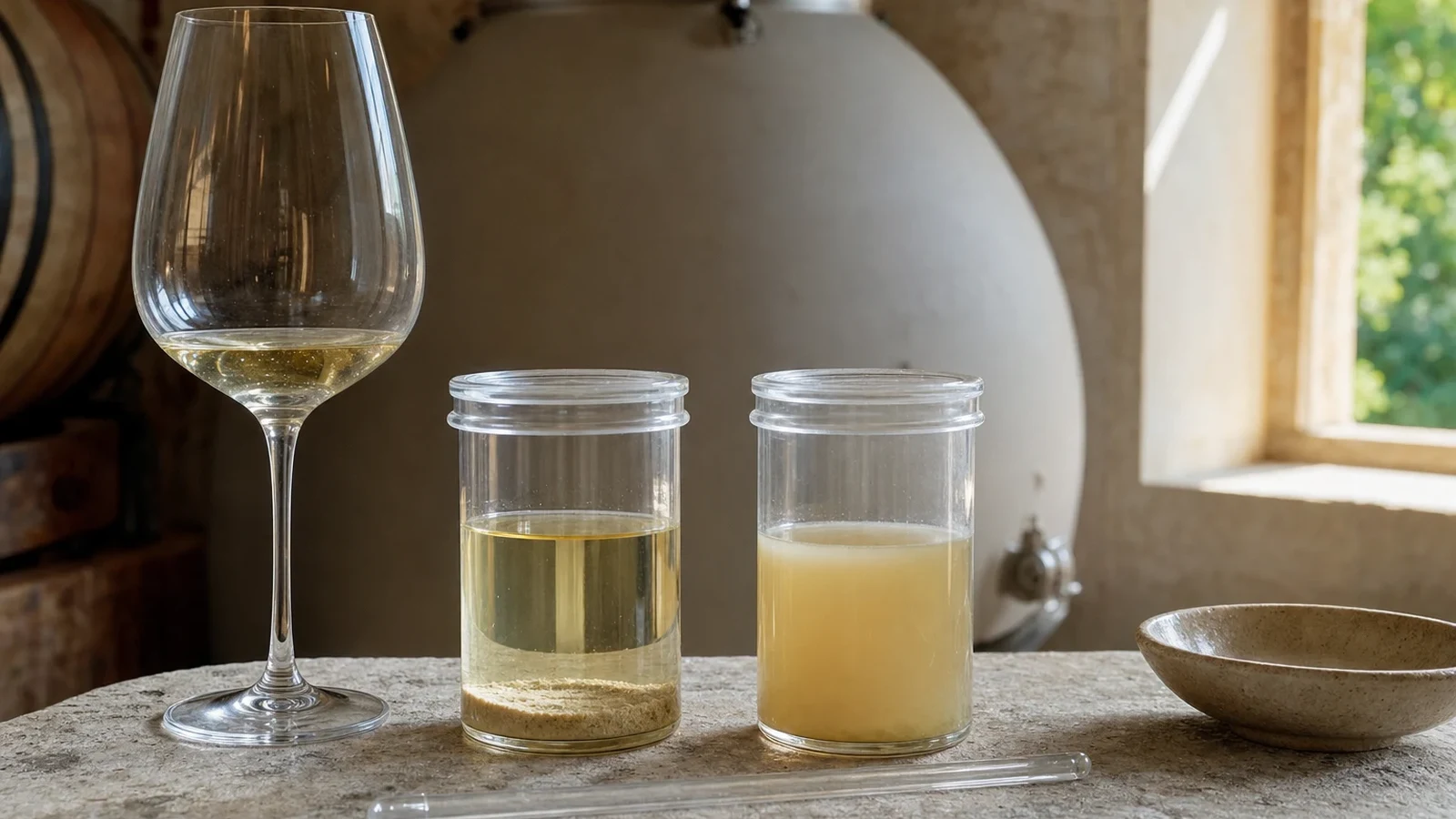
Build a three-glass comparison
Try three Chardonnays when possible: one with no MLF and no oak, one with MLF but little obvious wood, and one with both MLF and barrel influence. Compare:
- Acid shape: sharp, brisk, rounded, or soft?
- Aroma: fresh fruit, cream, butter, toast, or spice?
- Texture: light, broad, leesy, or tannic from wood?
- Finish: refreshed by acidity or carried by body?
Labels rarely provide the complete recipe, so use producer notes when available and treat the exercise as learning, not a blind-test certainty.
Malolactic fermentation is an acid decision before it is an aroma story. Remember that order and the word “buttery” becomes a clue, not a conclusion.