
Sweet wine is not one recipe. Its sweetness may begin with extra time on the vine, a helpful fungus, a winter freeze, or a deliberate stop in the cellar. Each route changes more than sugar: it also changes aroma, texture, acidity, risk, and price.
The useful first question is therefore not How sweet is it? but How did the sweetness get there? Once you know the route, the glass becomes easier to read.
First, sweetness needs balance
Grape juice contains fermentable sugar. Yeast normally converts much of it into alcohol and carbon dioxide. A wine tastes sweet when meaningful sugar remains after fermentation, but the sensation is shaped by the whole wine. Bright acidity can make a richly sweet wine feel energetic; alcohol and body can make the same sugar feel broader. Serving temperature matters too.
This is why a sugar number never tells the complete sensory story. The most compelling sweet wines do not simply pile sweetness onto the palate. They carry it with freshness, aroma, and structure.
Route one: wait for late harvest
Leave healthy grapes on the vine and they continue to ripen. Water may slowly leave the berries, while sugars, flavours, and potential alcohol become more concentrated. The result can range from gently off-dry to opulently sweet, depending on the fruit and how far fermentation proceeds.
Late harvest is a timing decision with real risk. Birds, rain, rot, and autumn weather can take the crop before the grower does. It is also not a synonym for sweetness: late-picked grapes can ferment dry. The label tells you when the fruit was harvested, not automatically how much sugar remains.
Route two: let noble rot concentrate the berries
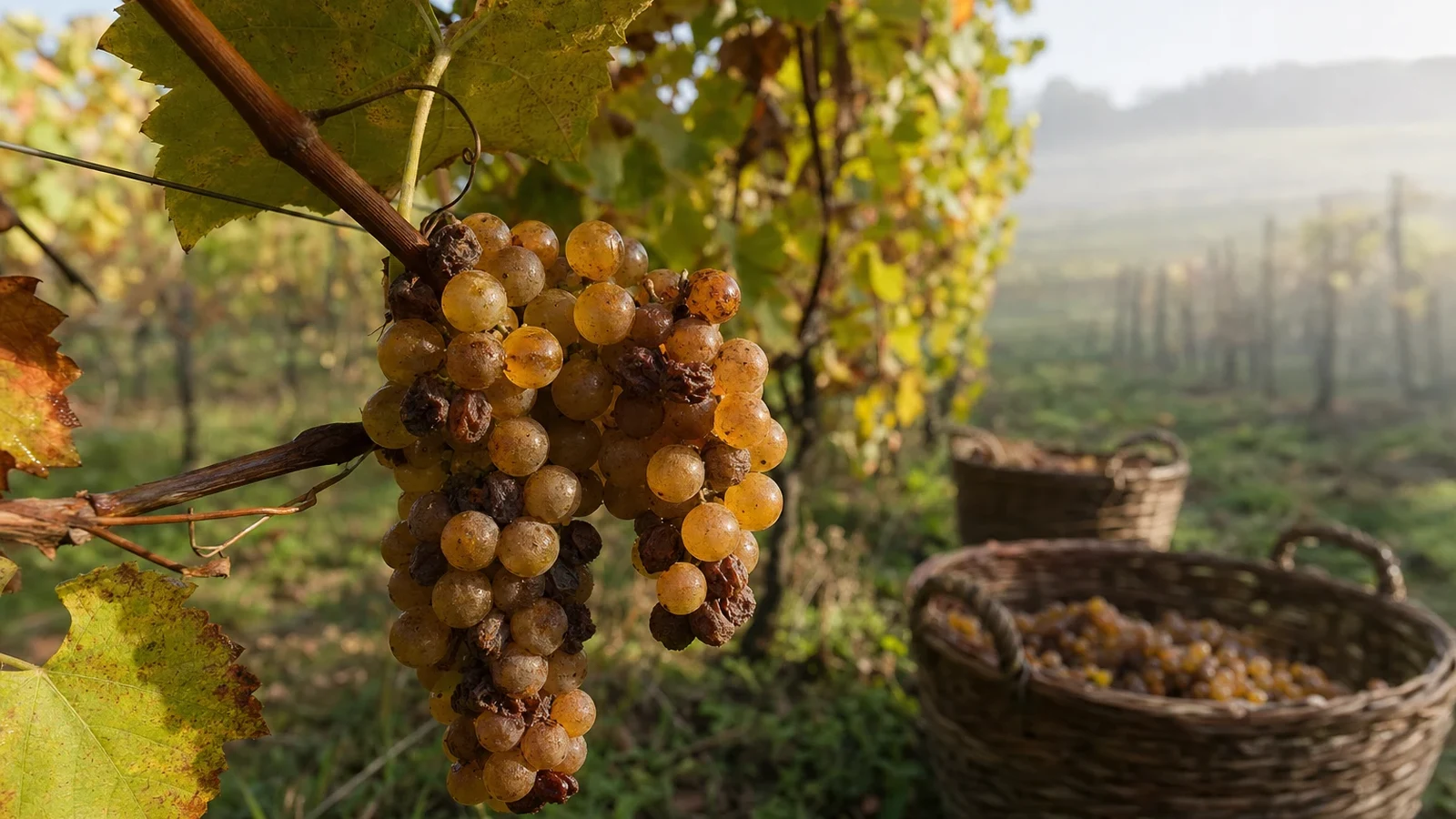
Under a rare rhythm of humid mornings and drier afternoons, Botrytis cinerea can act as noble rot rather than destructive grey rot. It makes grape skins porous, allowing water to evaporate and concentrating sugar, acidity, and flavour. Growers often pass through the vineyard several times, selecting suitable berries by hand.
That process can bring notes associated with honey, saffron, citrus peel, dried apricot, and ginger, but no bottle is required to show the entire list. Noble rot is a vineyard event, not a flavouring. Explore the noble-rot method to see why weather and selection matter so much.
Route three: press grapes while they are frozen
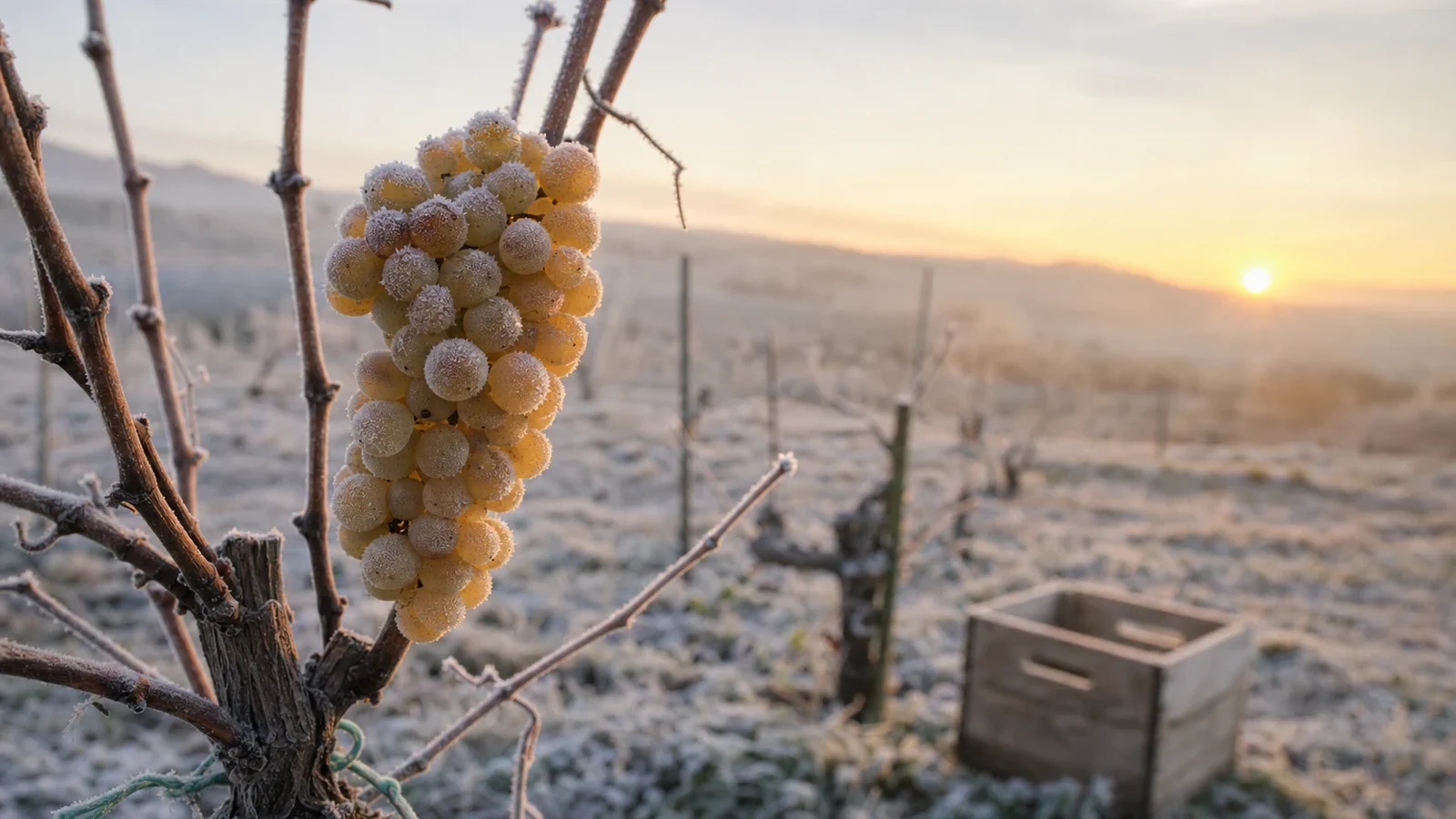
For true ice wine, grapes freeze naturally on the vine and are picked and pressed while frozen under the relevant regional rules. Much of the water stays behind as ice, so only a small quantity of concentrated must runs from the press. Sugar rises, but acidity is concentrated too — a key reason good examples can feel vivid rather than syrupy.
This method depends on a hard frost arriving before rot, wildlife, or fruit loss ruins the crop. Yields are tiny and the harvest can happen on a bitterly cold night. The ice-wine profile follows that demanding sequence.
Route four: stop fermentation with sugar still present
A winemaker can preserve grape sugar by stopping yeast before it finishes. Cooling and filtration are common tools; fortified wines such as Port interrupt fermentation by adding grape spirit. The timing determines how much natural sugar remains and, in fortified wine, also shapes alcohol and structure.
This route is not a shortcut to the same result as frozen or botrytised fruit. The grapes begin differently, and the finished wines taste different. The fermentation-stop method explains the cellar logic without confusing it with concentration in the vineyard.
Taste the route, not just the sugar
Try four small pours side by side: a late-harvest wine, a botrytised wine, an ice wine, and a sweet fortified wine. For each, ask:
- Does the aroma suggest fresh fruit, dried fruit, botrytis-derived spice, or oxidative development?
- Where do you feel the acidity — at the first sip or mainly in the finish?
- Is the texture light, oily, dense, or warming?
- Does sweetness lead the wine, or does it feel carried by freshness and structure?
You are not trying to identify a method from one aroma. You are building a chain of evidence. Sweetness is the shared destination; the journey explains the personality.
Next time a sweet wine surprises you, follow the sugar backwards. Vineyard time, noble rot, frost, or a stopped fermentation will tell you far more than “dessert wine” ever could.