
Most alcoholic fermentation begins after grape juice meets yeast. Carbonic maceration adds a curious opening act: intact berries sit in a carbon-dioxide-rich environment and begin changing from the inside.
That intracellular process helps explain a recognisable family of bright, fruit-forward wines. It does not create one compulsory aroma, and it is not identical to the traditional semi-carbonic method used widely in Beaujolais.
The berry becomes a tiny vessel
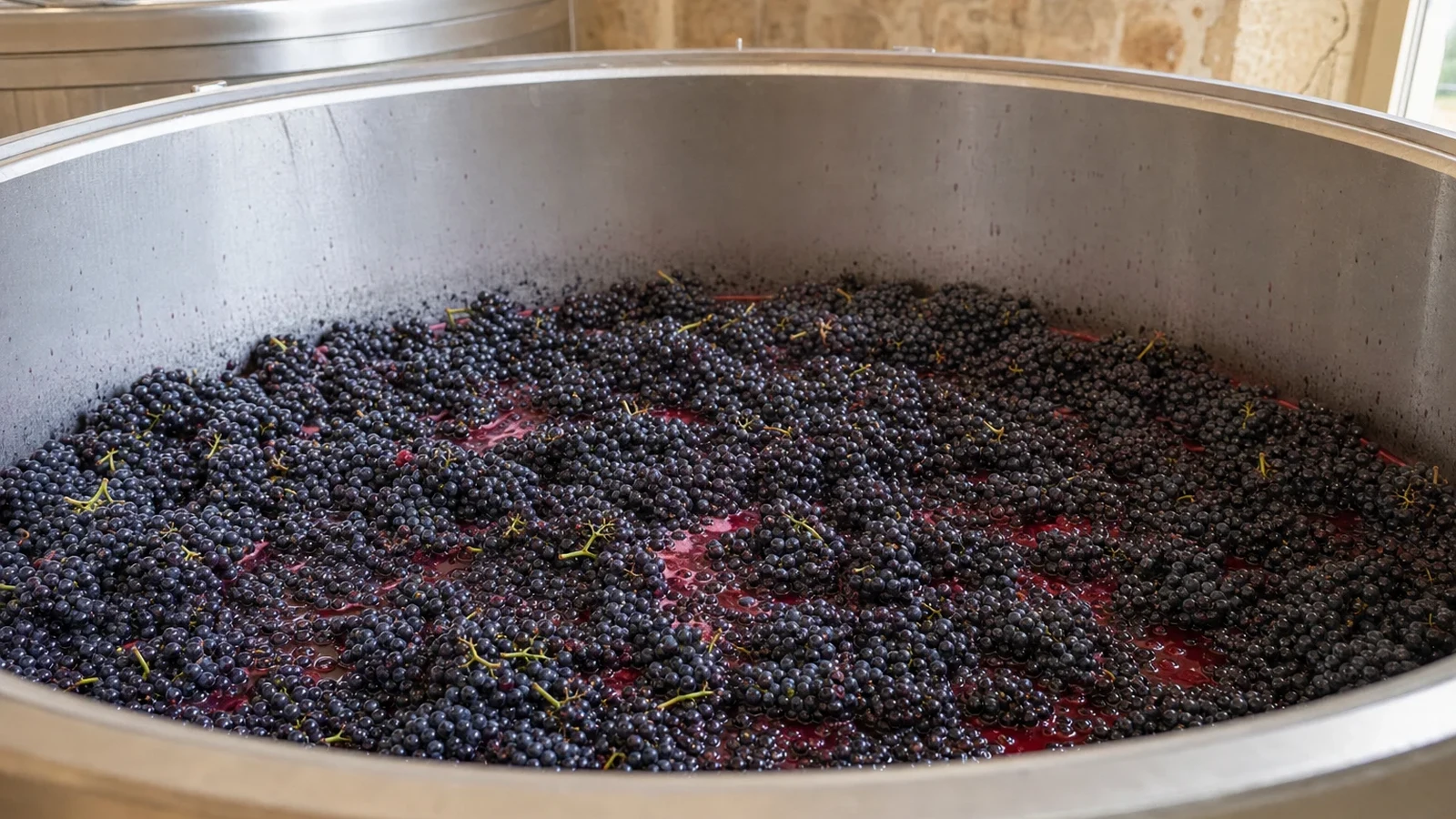
Whole, uncrushed grapes are placed in a vat that is filled with carbon dioxide or becomes rich in it. With little oxygen around them, intact berries begin intracellular metabolism. They produce a small amount of alcohol and distinctive aroma precursors before their skins break and normal yeast fermentation takes over.
The process depends on berry integrity. Once fruit is crushed, juice and yeast move the wine toward conventional fermentation. That is why careful handling and whole bunches matter.
Carbonic and semi-carbonic are related, not identical
In full carbonic maceration, a sealed vessel is deliberately filled with carbon dioxide. In semi-carbonic maceration, the weight of whole bunches crushes fruit at the bottom. That juice begins a normal yeast fermentation, releasing carbon dioxide that creates a low-oxygen atmosphere for intact berries above.
Beaujolais’ traditional method is commonly semi-carbonic. Temperature, vatting time, amount of juice, pumping over, destemming, pressing, and later ageing all vary. Open the carbonic-maceration profile for the shared principle without flattening these choices into one recipe.
Why the wines can feel so immediate
The method is associated with vivid fruit, floral lift, low-to-moderate extracted tannin, and an easy, juicy shape. Tasters often mention red cherry, raspberry, violet, banana, or confectionery notes. Those descriptions are possibilities, not identification stamps.
Grape variety and handling still matter. Short vatting and gentle extraction can make a wine light and ready early; longer maceration, more extraction, and careful ageing can produce serious, structured bottles. Carbonic character is a direction, not a quality level.
Gamay is famous, but not alone
Gamay and Beaujolais made the method famous, especially through youthful wines. Yet producers use carbonic or partial-carbonic techniques with other grapes and in other regions. The grape does not disappear behind the process; the two speak together.
Even within Beaujolais, do not reduce every bottle to banana-scented Nouveau. Village, cru, vintage, whole-bunch proportion, maceration length, and élevage create a much broader range. The method belongs to the region’s toolkit, not its entire identity.
Taste for process with caution
Compare a youthful semi-carbonic Gamay with a conventionally fermented red of similar body. Look for clusters of evidence:
- Does the fruit feel freshly lifted or darker and more extracted?
- Is tannin light, firm, or simply hidden by fruit?
- Are floral or distinctive fermentation notes present?
- Does the finish stay juicy, or build savoury depth?
One banana-like aroma does not prove carbonic maceration, and its absence does not rule it out. Blind tasting works best when method, grape, structure, and place support the same conclusion.
Serve the style, not the stereotype
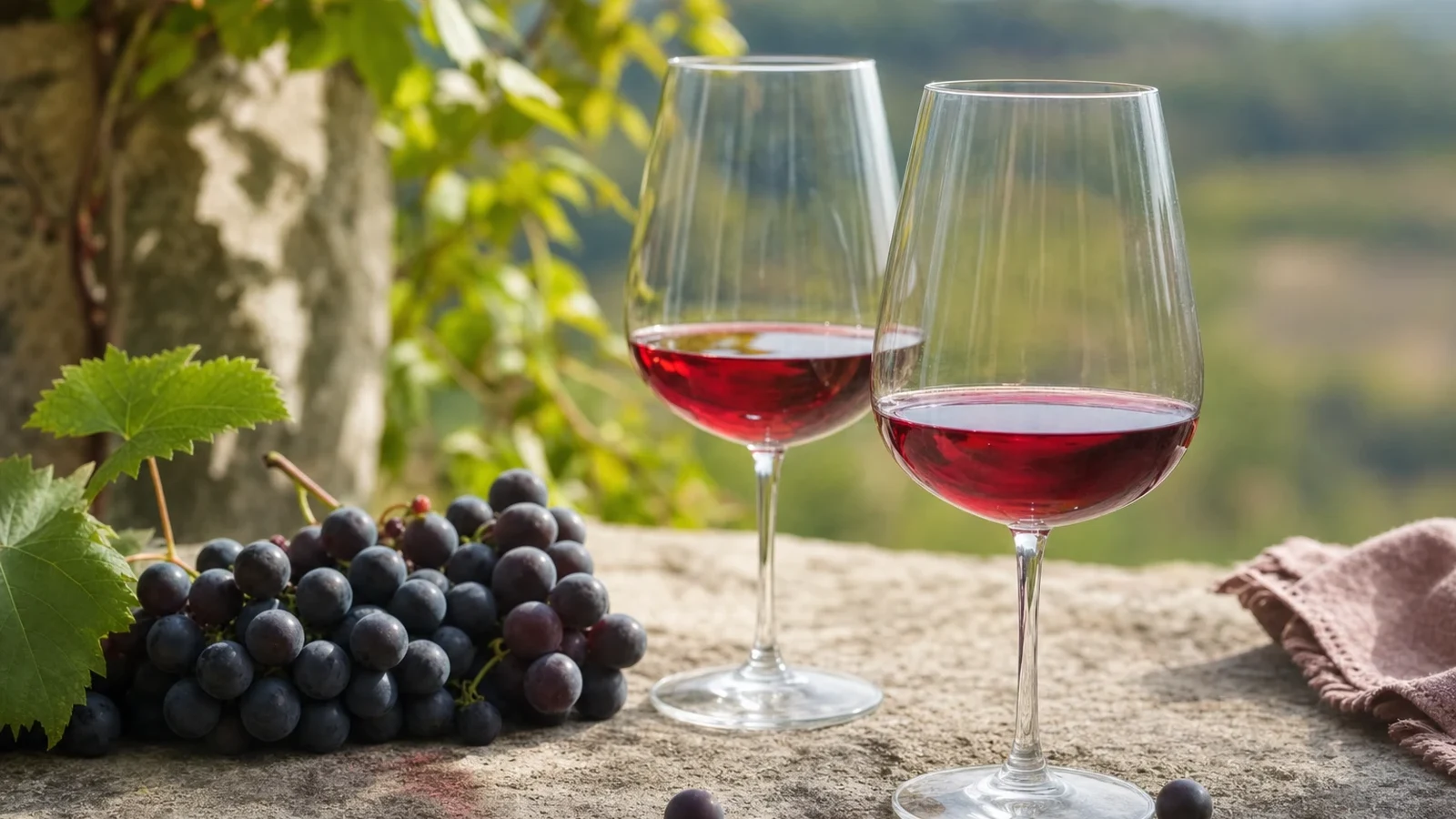
Lighter examples often shine with a slight chill and simple food: charcuterie, roast chicken, mushrooms, or lentils. More structured cru wines may need a larger glass, more air, or bottle age. Read the wine in front of you rather than treating the method as serving instructions.
Carbonic maceration begins inside the berry, but its lesson reaches further: a familiar grape can speak with a different rhythm when the order of winemaking changes.