The Cellar Log

What's new

See what you can learn, explore, and try next in Wine Companion.

  1. New feature

    Explore more wine countries on the map

    Map Challenge now takes you through Austria, Germany, France, Georgia, Italy, Spain, Portugal, the United States, Canada, Australia, New Zealand, South Africa, Argentina, and Chile. Locate individual regions or match several in one round, then use Profile Check to connect available regional grape data with the right place.

    Choose a geography level separately from quiz difficulty to practise broad regions, subregions and origins, or the available specialist appellations and sites.

    Every map includes its source credit, and the new Data sources page explains where the boundaries and vineyard figures come from.
  2. New feature

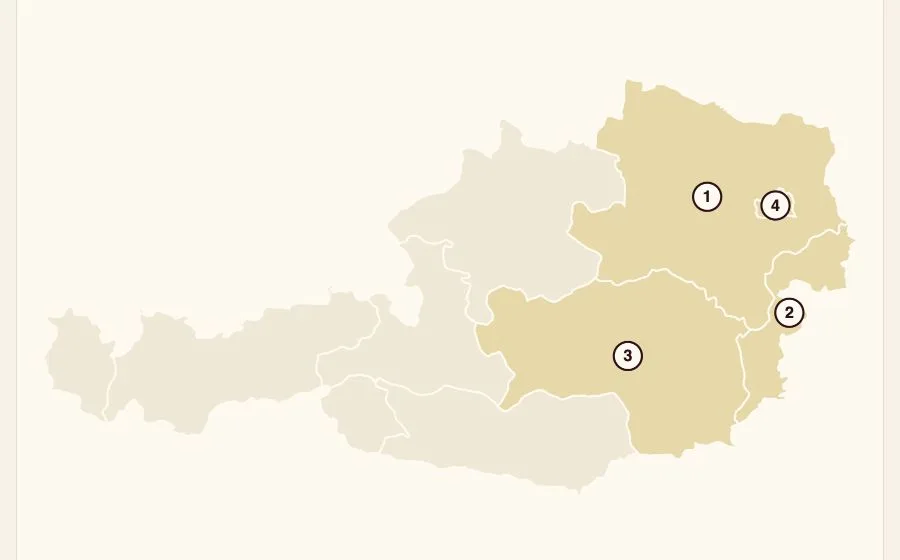
    New quiz formats, with Austria as our map pilot

    Quiz training now offers three new ways to practise:

    • Mixed Challenge combines different question formats into one varied round.
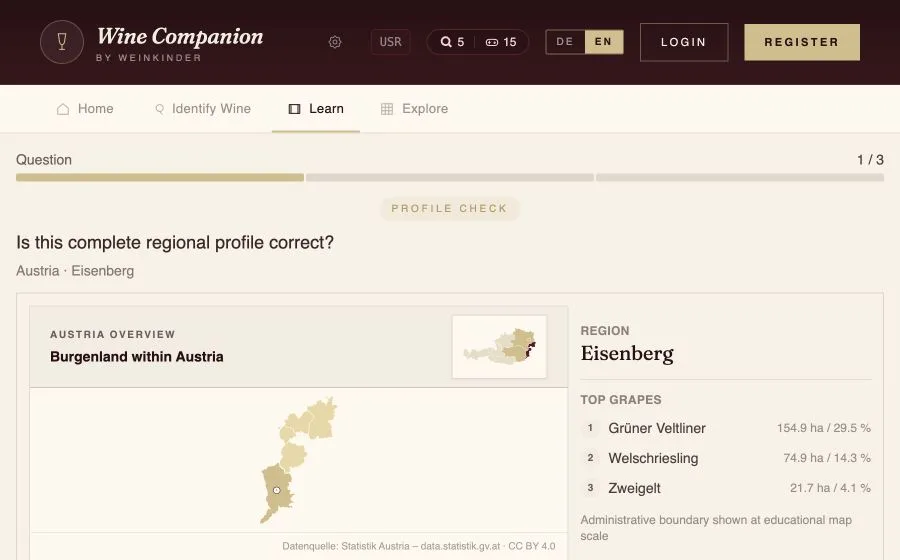
    • Profile Check asks you to verify a wine region, its map location, and its grape profile together.
    • Map Challenge lets you locate and match wine regions on an interactive map.

    Austria leads the way: get to know Lower Austria, Burgenland, Styria, and Vienna. In selected regions, you can then go one level deeper and explore individual DAC areas.

  3. New feature

    Discover what is new in Wine Companion

    Wine Companion now has a dedicated, bilingual changelog that makes new features and meaningful improvements easier to discover.

  4. New feature

    Skin-contact whites: colour, grip, and an ancient idea.

    White grapes do not have to make pale, delicate wine. Leave their juice with the skins and a different set of possibilities appears: deeper colour, more texture, and sometimes a gentle tannic grip.

    Read the full story →
  5. New feature

    A flexible grammar for wine and food.

    “Red with meat, white with fish” is easy to remember and easy to outgrow. A better approach is to notice a few forces in the glass and on the plate, then decide whether you want harmony or contrast.

    Read the full story →